
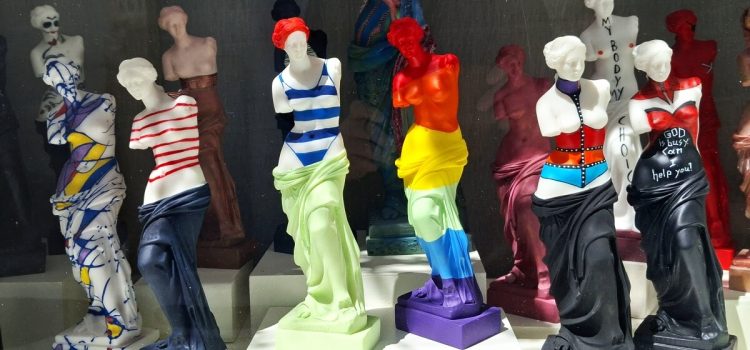
The Cycladic island of Milos is famed as the place where the Venus de Milo was unearthed, but it has much, much more to offer. (And of course Venus now resides in the Louvre, no longer on Milos.)
After hectic Mykonos and quiet Sifnos, Milos was the “Goldilocks” island; it was just right. It was large enough to have many interesting sights, but small enough that we felt like welcomed visitors wherever we went. One thing that was different about Milos compared to the other two islands that we visited is that it’s not completely dependent on tourism. It has major mining operations for bentonite and perlite and other volcanic minerals. And as far back as Neolithic times Milos traded obsidian. (Note: our interest in Milos mining was not strong enough for us to check out the Milos Mining Museum, although we’re sure that the international convention of geologists that was in town attended.)
Monday, May 11, 2026 – Sifnos, Milos
We arrived in Milos late in the day at the port of Adamas, which in all truth is not a particularly attractive town in comparison to other beautiful villages on the island. After finding our hotel and arranging for a rental car for the next day we had just enough time to walk down to the seaside restaurant O! Hamos! Tavern in time for a truly spectacular sunset. Our meal was also memorable; the parchment baked lamb was our best meal of the trip (so far) and that is saying a lot in a country where it seems almost impossible to have a bad dining experience.
Tuesday, May 12, 2026 – Milos
The following morning we were on island time and didn’t manage to get going until shortly before noon. Our first stop was, naturally, the discovery point of the Venus de Milo which lies between the interesting early Christian catacombs burial sites dating back to the 1st century AD, and the ancient Greek theatre. The copy of the Venus de Milo placed in view of the ocean around Milos is far more attractive than her home inside the Louvre.
Since we could see the fishing village of Klima at the base of the hill that we were on, we drove down the narrow road to check it out. Some nice colourful fisherman’s huts, but many seemed to have been repurposed as cute little homestays. After some wandering about and many photos we then drove up the mountain to the highest town (and capital of Milos), Plaka. Its car-free streets made for some nice poking about followed by a coffee in the plaza.
Re-energized with caffeine, we drove to another seaside village, Mandrakia. It seemed almost impossible that there could be even bluer ocean or more dramatic views, but that seemed to be the case! From just past Mandrakia we could see the white rocks of Sarakiniko “Beach”, just a short drive away. Not exactly a beach (although you could swim there), but rather white volcanic rock formations in strange shapes. Fun to wander about, although extremely hot. After our visit the the “lunar landscape” beach we headed back to Adamas for seaside dining, including the best calamari that we’ve ever had.
Wednesday, May 13, 2026 – Milos
We continued our lazy ways the following day with a late start again due to a leisurely breakfast at the Artemis bakery/coffee shop. A mix of local men set for a day of coffee and cigarettes, mine workers double parking to grab an espresso on the way to work, and fellow tourists getting ready for another tough day in the Greek islands.
Our day started with a drive up to the oldest archaeological site on Milos, the Bronze Age Phylakopi. Unfortunately, Phylakopi was a bust as the gate was locked so we carried on to the nearby Papafragas Cove beach. There was a beach several dozen metres below, but only accessible by boat. Looked enticing though. We then passed through the village of Pollonia at the north of the island to stop in at Kostantakis Cave Winery. Lounging at a cafe by the scenic Pollonia harbour was all that we managed after some token poking about at at few shops. Our final stop for the day was the rugged Firiplaka Beach with its dramatic cliffs of coloured rock. After shooting a silly number of pictures we headed back to our hotel in Adamas. After a sunset beer,we did something that we rarely do by making a return visit to the same seaside restaurant as the previous evening. Those calamari were just too good to resist!
Wednesday, May 13, 2026 – Milos, Athens
On our final half day on Milos, after brunch at our favourite bakery, we drove back up to Plaka for some browsing through the narrow, cobbled streets leading up to the Venetian-built Castle of Milos (or Kastro), then checked in with the Archaeological Museum of Milos. Having established that the Phylakopi archaeological site was not going to be open during our visit (although unclear whether “not yet, later” meant next day, next month, or next year), we contented ourselves with a quick tour of the small but excellent museum. While the 14th century BC “Lady of Phylakopi” was impressive, of course another full size copy of Venus de Milo was the star of the show (in the museum, and in every souvenir shop on the island, as shown in the feature image above).
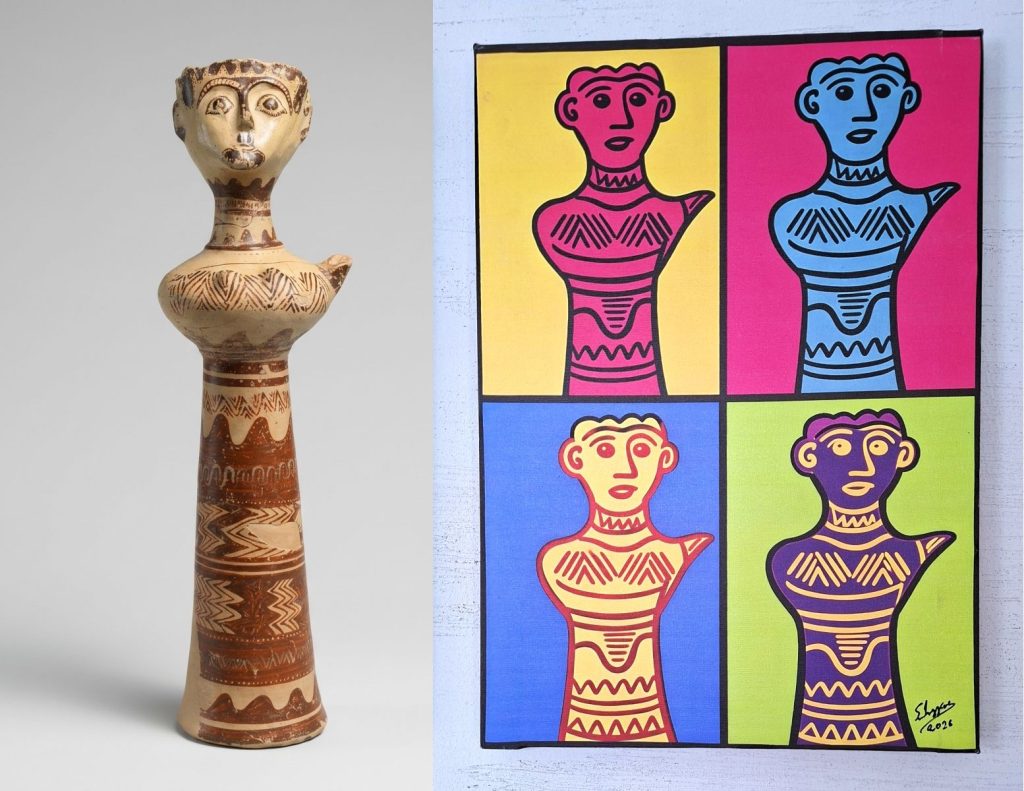
And then it was time to drive to the airport, return our rental car, and head for Athens.
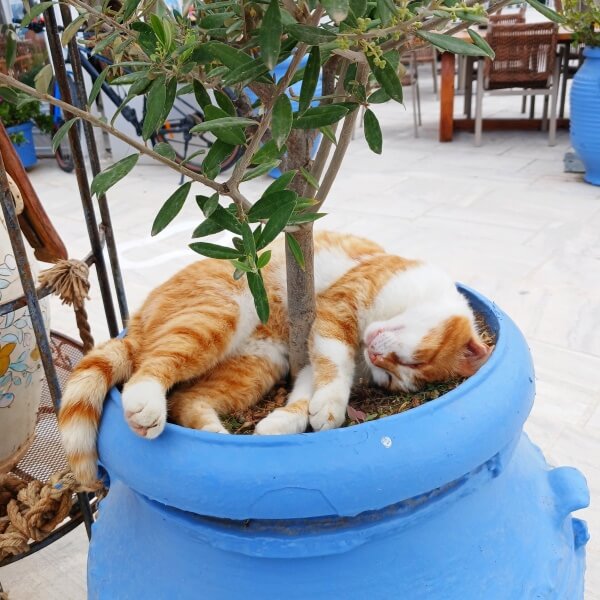
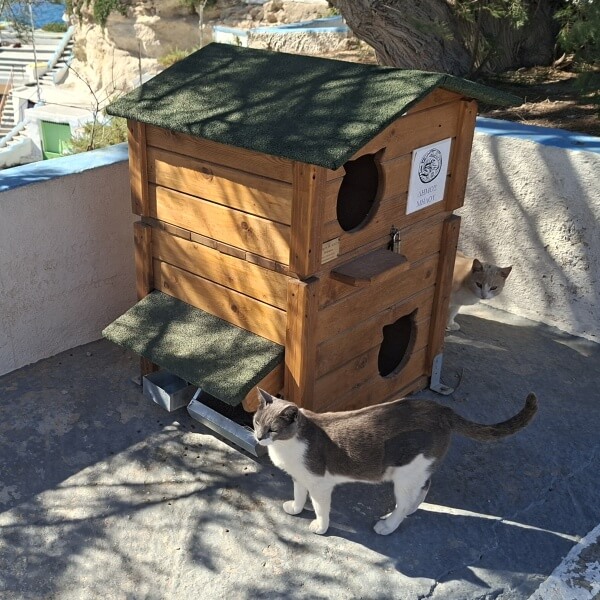
Before leaving, it’s important to answer the burning question “Does Milos have cats?”. Yes! We wrote about the cat population of Sifnos, but Milos has taken the “community cats” concept a step further by providing cat condos complete with a food supply (only for those cats who don’t sleep and eat in the local restaurants!).
Images of Milos
See our pictures of Milos on Flickr:
www.flickr.com/photos/100countries/albums/72177720333755555
See links to all of our posts for this trip on 2026-2 – Greece and Albania.