
Hoc est quod ait Heraclitus: ‘in idem flumen bis descendimus et non descendimus’.
This is what Heraclitus says: “We go down and do not go down into the same river twice.”
Well, Rio de Janeiro was certainly not the “same river” as it was when we last visited 45 years ago. For example, the Tripadvisort list “The 15 Best Things to Do in Rio de Janeiro” has 3 attractions in the top 15 that didn’t even exist in 1981! Admittedly, we’ve changed too (and Heraclitus’ quote has been widely interpreted to mean that both the river and the man change). While we could now afford to stay in one of the beachfront hotels that line Copacabana Beach, we’re not really sure why we naively expected that we’d walk across a two-lane Avenida Atlantica and step directly on to the sand.
We didn’t have much planned for Rio; just relaxing by the pool and on the beach. We had one day scheduled for a walking tour to see some of the downtown attractions and then revisit the iconic Christ the Redeemer and Sugarloaf. However, even that little that we did have planned got rescheduled due to unsettled weather. There was rain our first evening, the red flags were out on the beach the next day, and the following day’s walking tour was cancelled due to predicted rain (meaning no views). So we changed things up! We scheduled a bus tour rather than a walking tour and took a chance on the weather when visiting Christ the Redeemer. We got lucky in the morning and had fine views from the top of Corcovado, and the weather held for city tour stops that included:
- The most iconic football stadium in Rio de Janeiro, the Estádio do Maracanã, built for the first World Cup in 1950. This “cathedral” of football was the largest in the world at the time.
- Rio’s new cathedral, whose strange pyramid shape definitely proves the adage that “beauty is in the eye of the beholder”.
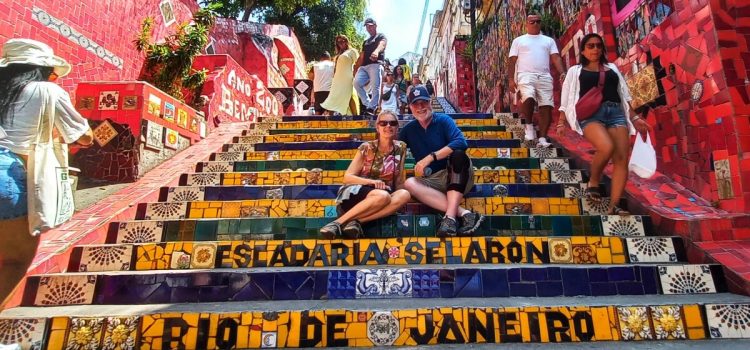
- Escadaria Selarón (the Selaron Steps), a tiled staircase created by Chilean artist Jorge Selarón as a “tribute to the Brazilian people”. The now world famous steps hadn’t even been started when we last visited Rio.
Unfortunately, by the time that we took the two-stage cable-car for Pão de Açúcar (Sugarloaf Mountain), the clouds were blowing in and as we ascended the second cable-car segment we disappeared into a thick mist and didn’t see a thing.
On our third day in Rio de Janeiro, we packed umbrellas and raincoats and headed for the old city (focusing on some indoor visits, nothing that needed clear weather for views). Sights included:
- The 18th century former cathedral (much more appealing than the new one).
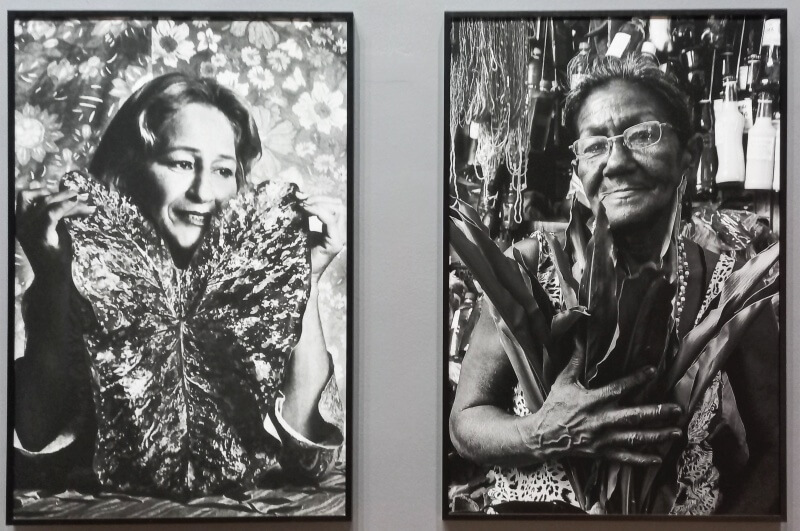
- The Centro Cultural Banco do Brasil (CCBB Rio de Janeiro); a bank repurposed as a cultural centre, featuring a history of bank notes and a really good photography exhibition.
- Real Gabinete Português de Leitura (“Pourtugese Reading Room”) ranked as the 4th Most Beautiful Library in the world. (Who goes around ranking libraries anyway?)
- Lunch at the venerable, belle-époque Confeitaria Colombo, one of the oldest cafes in Rio. Opened in 1894, the mirrored pastry shop now draws hordes of tourists (including us), but locals are still whisked to the front of the line to enjoy their tea and cakes in grand style.
- Our final stop was a ride on the Bondinho de Santa Teresa. This iconic yellow tram is an historic, open-sided streetcar that connects downtown Rio to the bohemian hilltop neighbourhood of Santa Teresa. Operating since 1872, it is one of the oldest railway lines in the world and crosses the scenic 18th-century Carioca Aqueduct. Check our YouTube video below.
On our last day in Rio de Janeiro, we took advantage of the hotel’s late check-out then took an Uber to the Museum of Tomorrow (Museu do Amanhã) to check out this futuristic building’s displays on sustainable cities and an ecological world. Rio is certainly the right spot for such a museum since the city struggles with some significant sustainability issues. Approximately one quarter of Rio’s population lives in favelas (slums, or “subnormal agglomerations” in official statistics’ Newspeak) which we could see rising up the hillside as we rode the Bondinho. Brazil struggles with huge income inequalities between rich and poor (as measured by the Gini index, where Brazil is among the worst 10 countries in the world). Even affluent areas such a Copacabana have their share of homeless people. It seems that Brazil still struggles with systemic racism. They were the last country in the Western world to abolish slavery and Brazil imported ~40% of all slaves forcibly taken from Africa. Unsurprisingly, Rio is notorious for its high crime rate. (We were warned repeatedly by guides about safety measures.) When it comes to environmental sustainability, Brazil is of course custodian of one of the most critical ecosystems in the world, the “lungs of the earth” Amazon rainforest. We’re not sure that the Museum of Tomorrow will actually make a difference, but it’s a great starting point for raising awareness. The two images below, juxtaposed at the CCBB photography exhibition, are an interesting statement about Rio and Brazil.
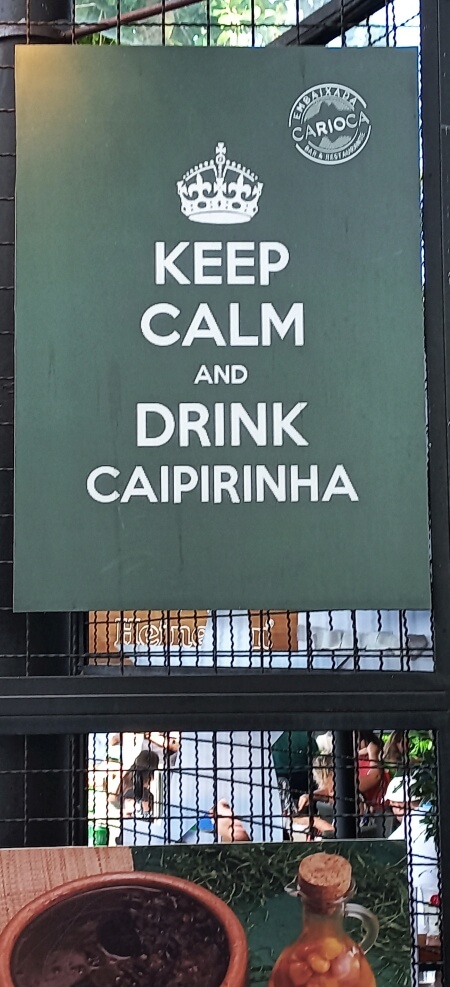
In the late afternoon, we took an Uber to the airport for our flight home to Canada. We may just have had one final caipirinha first though. The sign pictured below isn’t just good advice for Rio de Janeiro; it’s a great motto for all travellers wherever they may find themselves!
PHOTOS FOR
Rio de Janeiro
See photos in a high resolution slideshow on Flicker.
Scroll, or click/tap any image in the slideshow block below to open Flickr in a new tab.

See photos in a pop-up lightbox.
Visit our Uruguay and the Amazon page to see all of our posts from our first trip of 2026!